
Dyeing Technology
Common Technical Problems in Dyeing and Finishing
1. Generation and removal of oligomers:
1.1 Definition: oligomers are low-molecular-weight substances inside polyester fiber with the same chemical structure as the polyester. They are a by-product of polyester spinning; generally, polyester contains about 1-3% oligomers.
Oligomers are polymers composed of few repeating units, with molecular weight between small molecules and high polymers. The word comes from the Greek "oligos", meaning "few". Most polyester oligomers are cyclic compounds formed by three ethylene terephthalate units.
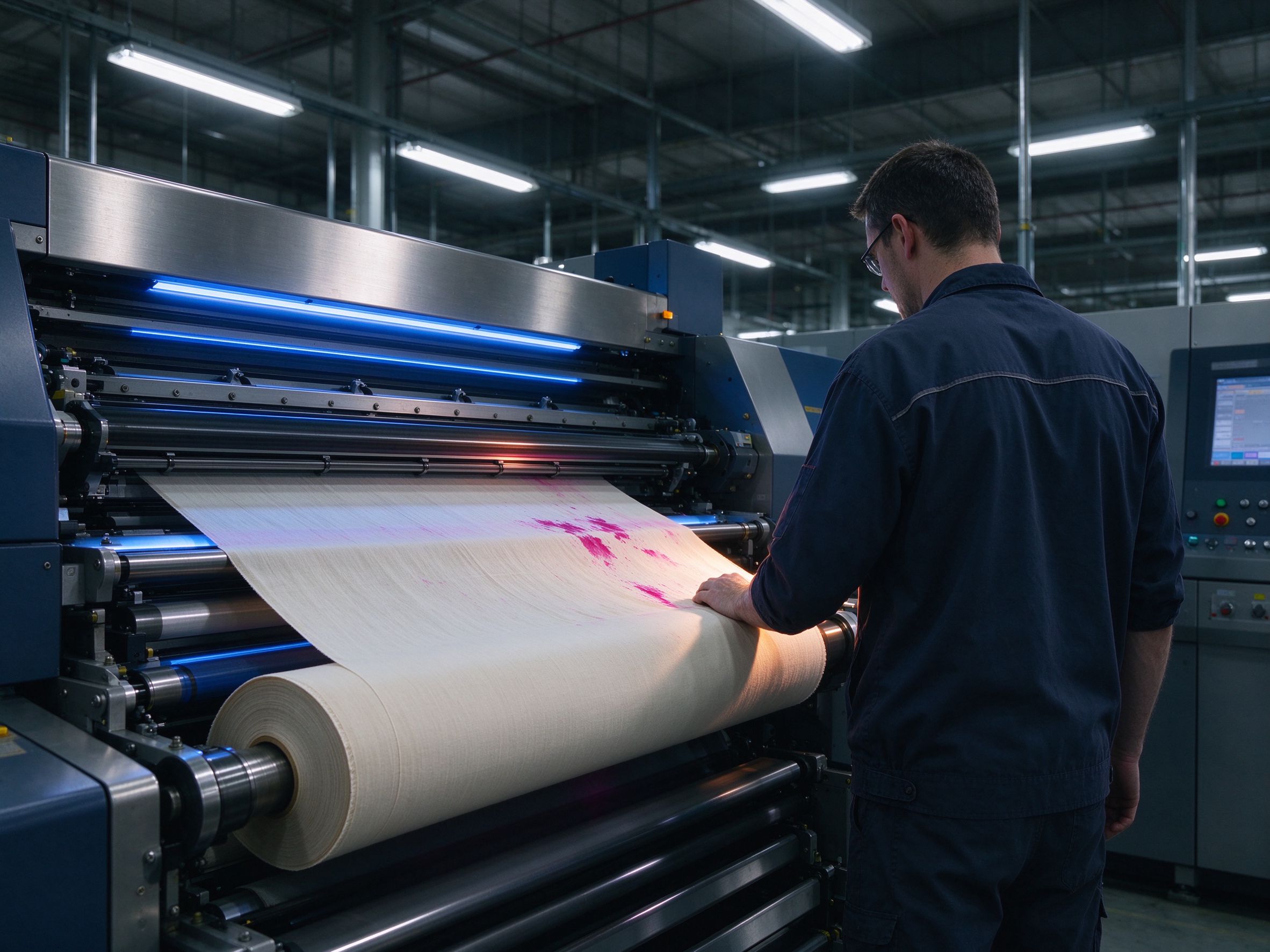
1.2 Effect: oligomers cause color spots and patches on the fabric surface; in yarn dyeing they produce white powder. When the temperature exceeds about 120 degC, oligomers dissolve in the dye bath and crystallize out of solution, combining with aggregated dye. On cooling they deposit on the machine or fabric surface, forming color patches and spots. Disperse dyeing is usually carried out at 130 degC for 30 minutes, so the problem is common.
1.3 Removal: use carriers or special auxiliaries to disperse oligomers; add a reducing clearing step after dyeing; clean the machine regularly; control the cooling rate to prevent deposition.
2. Other common technical problems: poor reproducibility of shades, levelness defects and creases. Stable pretreatment, accurate dosing and consistent machine condition are the foundation for solving them.