How the line works
Wrinkle-free finishing is a three-step process. The cloth is padded with a resin solution, squeezed to a set wet pick-up, dried, and then cured at high temperature. During curing, the resin cross-links with the cotton fibre.
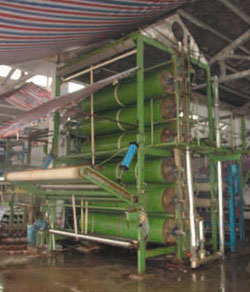
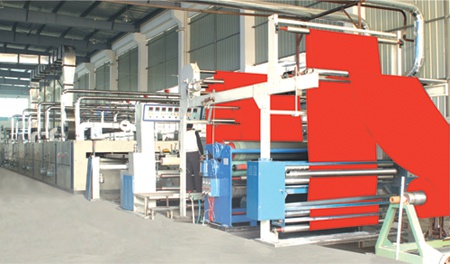
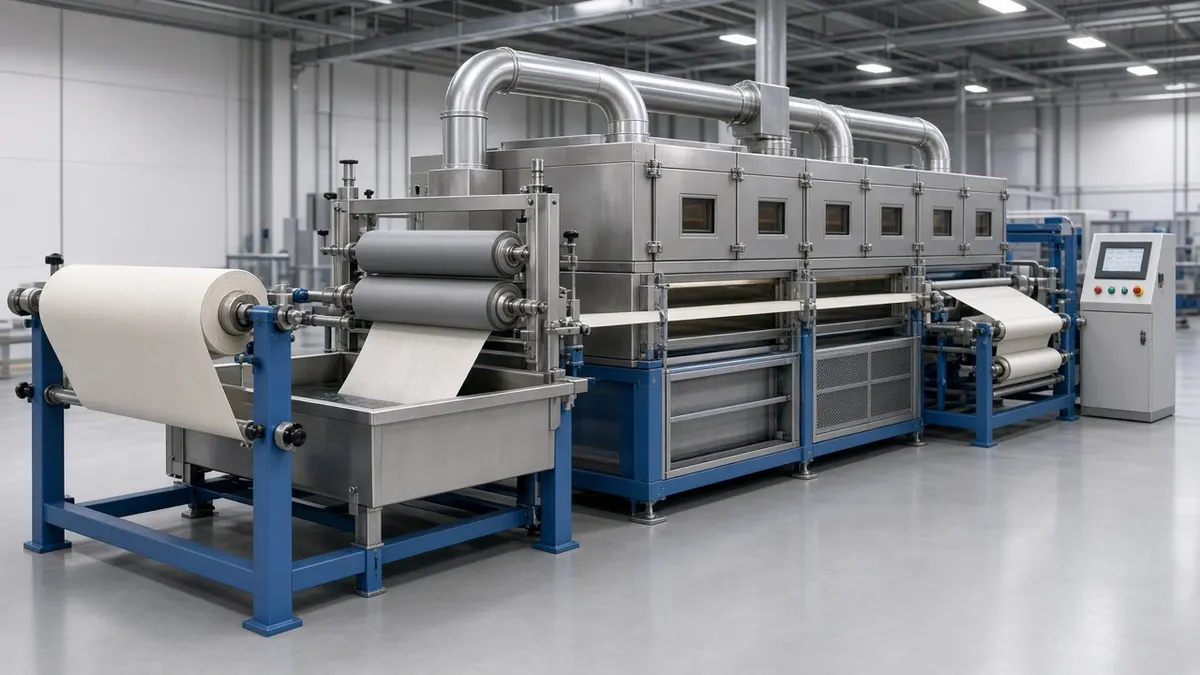
There is no single machine called a resin finishing machine. The line is a padding mangle plus a stenter, sometimes with a pre-shrinking unit before it or a softening step after it.
What goes in the line
Padding mangle: puts the solution on the cloth and squeezes out the excess. Wet pick-up for finishing is typically 55 to 75%. The squeeze must stay even across the width, or the finish varies from edge to centre.
Hot air stenter: dries, holds the width, and cures. Curing temperature for durable press finishes is typically 175 to 200 °C. Dwell time depends on the resin, the fabric weight and the oven.
Options: a pre-shrinking unit if the cloth must also be stable in length; a softening step after curing; an exhaust unit sized for the oven.
Line data (typical)
| Item | Typical range | Set by |
|---|---|---|
| Fabric | Cotton and cotton blends, woven and knit | Your product |
| Wet pick-up | 55 to 75% | Padding mangle roller pressure |
| Curing temperature | About 175 to 200 °C | Resin supplier's recipe |
| Line width | Matches stenter width: 1,800 to 3,400 mm | Your widest fabric |
| Line speed | Set by oven length and curing time | Number of oven sections |
| Heat source | Heat transfer oil, gas or electric | Your plant |
Typical process ranges for this finishing method. Machine ratings are given in the quotation.
Limits to know before you buy
Resin finishing costs fabric strength. Tear and tensile strength usually drop after curing, and the loss depends on the resin and the dose. Test your cloth on a sample line first.
Formaldehyde content depends on the resin chemistry, not on the machine. Check the limit in your target market and choose the resin with your chemical supplier.
Curing needs time at temperature. A short oven forces a slow line speed. Plan the oven sections from the recipe, not from the drying requirement.
Frequently asked questions
Do you supply a complete resin finishing line?
Yes. We supply the padding mangle and the stenter as one line, matched in width and speed. Pre-shrinking and softening units can be added.
Can an existing stenter be used?
Often, if the oven reaches the curing temperature and has enough sections. Send the stenter details and we will check the match.
Why does the title say fabric?
Resin finishing also means epoxy resin work in other industries. This page covers textile finishing only.
What do I send for a quote?
Fabric type and weight, widest fabric, target line speed, resin recipe if you have one, heat source, and destination country.