What a stenter does
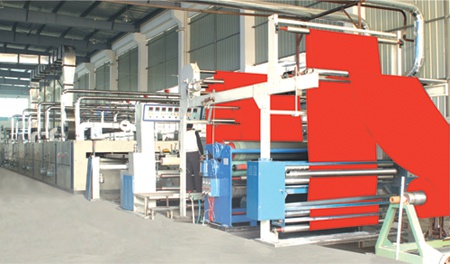
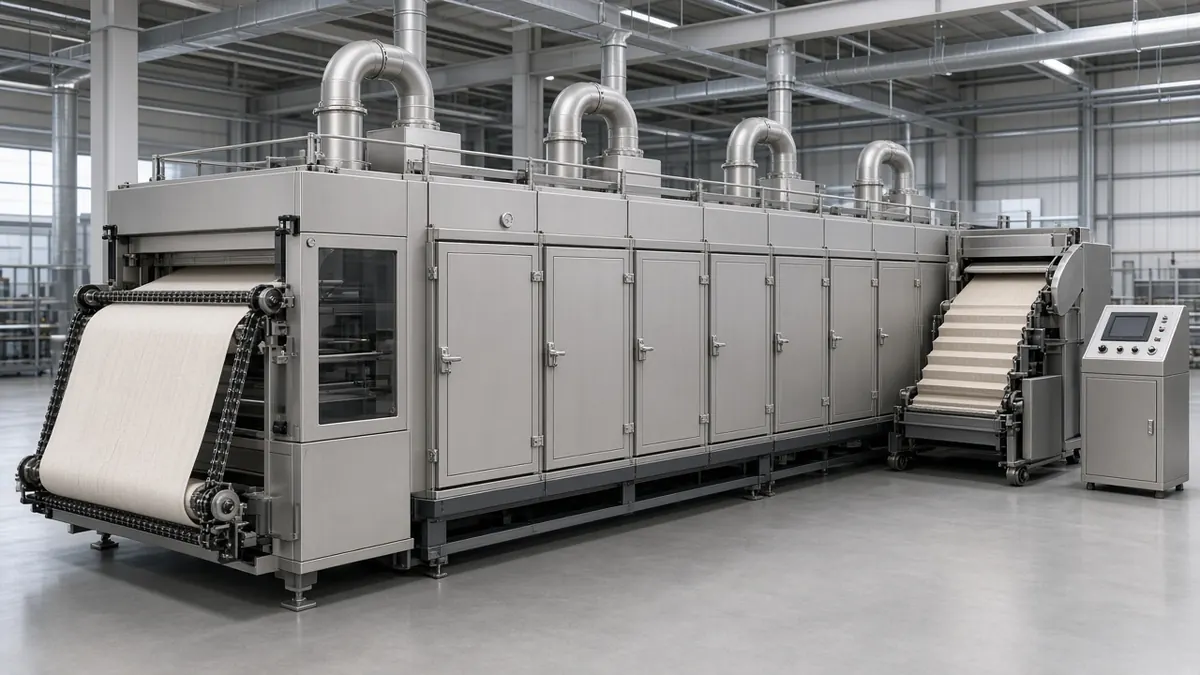
A stenter holds both edges of the cloth on two chains and pulls it through hot air chambers. The cloth is dried, brought to a set width, and fixed at that width.
Polyester and polyester blends are heat set on a stenter. The fibre locks in its dimensions and later shrinkage drops. Resin finishes and some coatings are also cured in the same ovens.
A plain dryer only dries. A stenter dries and controls width and weight. It costs more, so buy one when width control matters.
Pins, clips or both
Pins pierce the selvedge and hold it through the whole oven. They are the usual choice for knit fabric and light wovens. Clips grip the edge and suit woven fabric with a firm selvedge. A combined pin-clip chain handles both on one machine.
Wrong holding gives edge marks and poor width control. Tell us your fabric before you decide.
Technical data (JRD series)
| Item | Value |
|---|---|
| Type | Hot air circulation |
| Nominal width | 1,800 to 3,400 mm |
| Width adjustment | 900 to 3,200 mm |
| Fabric holding | Pins, clips, or combined pin-clip |
| Nominal speed | 100 m/min |
| Oven temperature | Up to 220 °C |
| Oven sections | N sections, 3 m each |
| Overfeed range | -10% to +100% |
| Heat source | Heat transfer oil, city gas or electric heating |
| Edge sensing | Infrared |
| Fabric delivery | Swing or roll |
| Drive side | Left or right |
| Installed power | 130 kW for the 8-section, 180 model (example) |
Figures are the published data of the JRD series. Section count and options are set per order.
How to choose a stenter
Match nominal width to your widest cloth, with margin. The width adjustment range tells you how narrow it can run.
Count sections against your slowest, hottest process. Drying alone needs few sections. Heat setting needs enough time in the oven at temperature, so plan for it. Typical polyester setting runs at 190 to 210 °C for about 20 to 30 seconds, but the right figure depends on the fabric and the dye.
Confirm the heat source before you order. Heat transfer oil, city gas and electric heating are all available. The cheap option in one country can be the unavailable one in another.
For knit fabric, check the overfeed range. Overfeed controls shrinkage and weight. Without it, knit fabric dries under tension and comes out narrow and heavy.
Ask about edge tracking and the expander. On wide fabric at speed they decide whether the cloth stays straight.
Frequently asked questions
What is the difference between a stenter and a tenter?
Same type of machine. Both names are in use.
Can a stenter dry and heat set in one pass?
Yes. The oven sections do both. For polyester, plan enough sections for the setting time, not just for drying.
Which heat source should I choose?
Use what your plant already has and can get at a fair price. We configure the machine for the source you confirm.
Can it run knit and woven fabric?
Yes, with the right holding system. Pins for knit, clips for woven, or the combined chain for both.
What do I send for a quote?
Fabric type and weight, widest fabric, speed or daily output, process (dry, set, cure), heat source, and destination country.