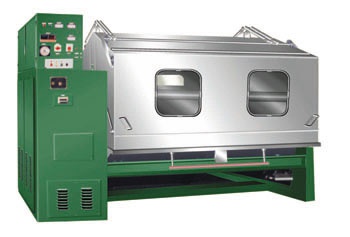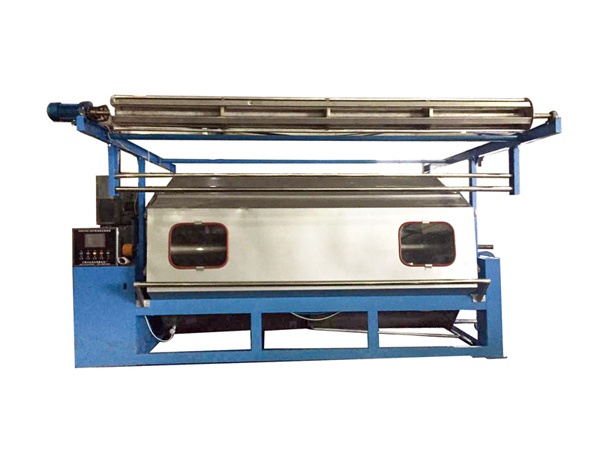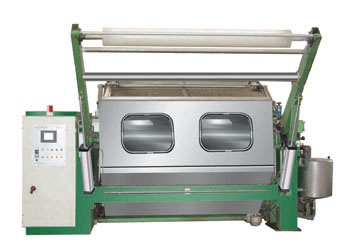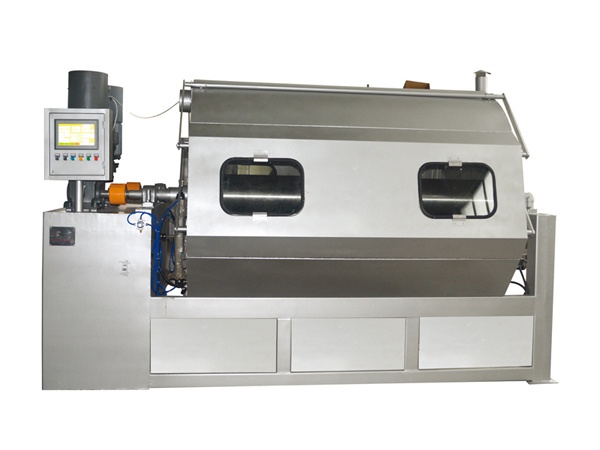
What a jigger does
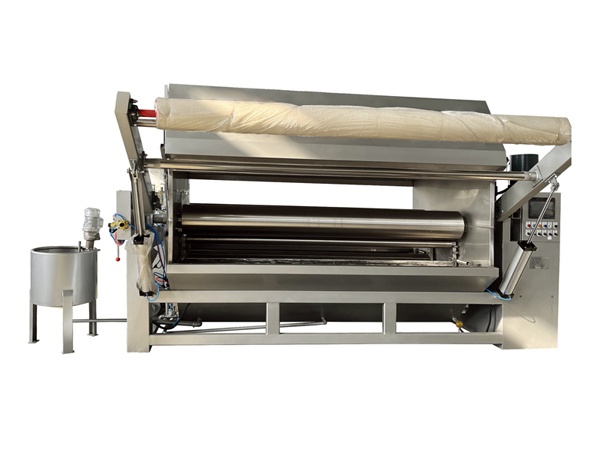
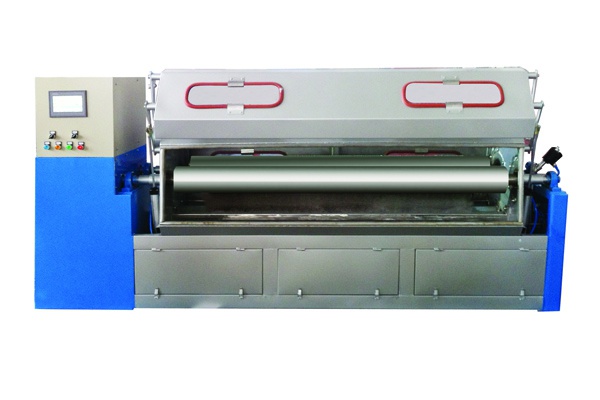
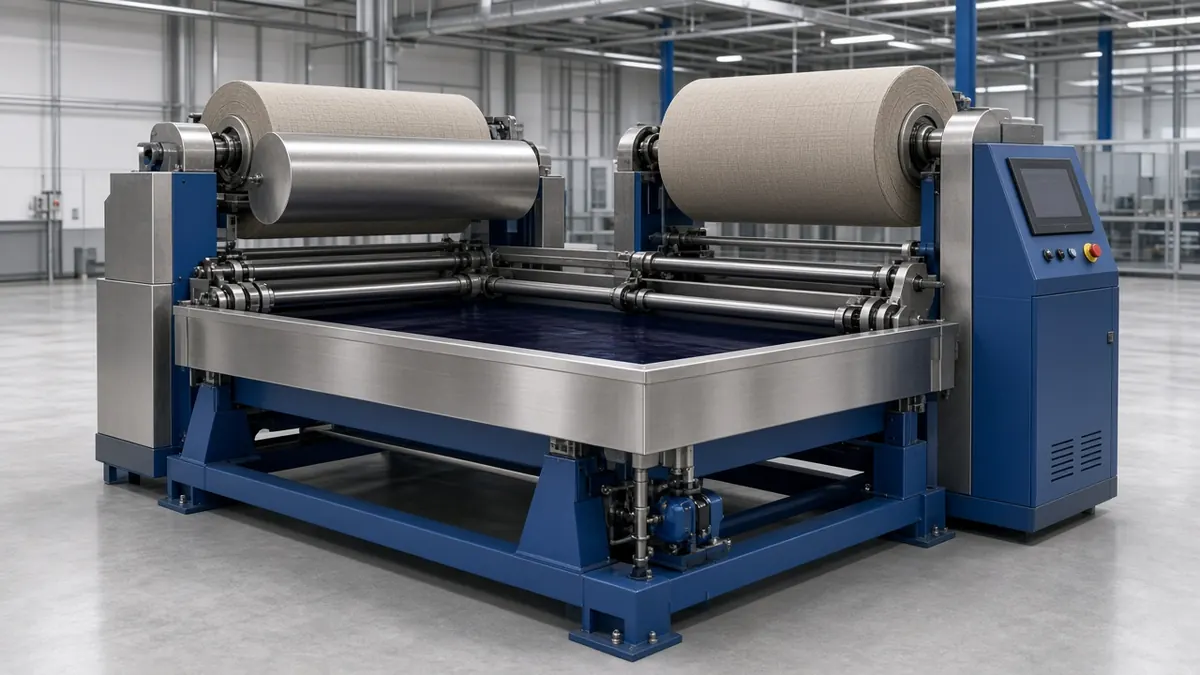
A jigger dyes fabric in open width. The cloth runs back and forth between two large rollers and passes through a small dye bath on every pass. One pass is called an end. Most recipes run an even number of ends.
The bath is small, so the liquor ratio stays low. Jiggers are usually quoted at about 1:2 to 1:3.5. That means less water, steam and dye per kilo of cloth than a rope machine.
The same machine also handles desizing, scouring, bleaching and washing. A dyehouse with many short orders often uses one jigger for both pretreatment and dyeing.
Fabrics it suits, and fabrics it does not
Suits: woven cotton, linen, viscose, polyester and blends, nylon, silk and filament fabrics. Dye classes include reactive, direct, vat and sulfur. Disperse dyes need a high-temperature model.
Does not suit: stretchy knit fabric. The rollers pull the cloth along its length, and a knit will grow in length and shrink in width. Run knits on an overflow machine instead. Very long runs of one shade are also cheaper on a continuous range.
Atmospheric or high temperature
An atmospheric jigger runs up to about 100 °C. It is the simpler and cheaper machine. Choose it if your orders are cotton, linen or viscose.
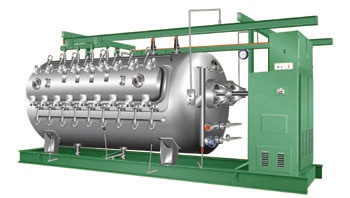
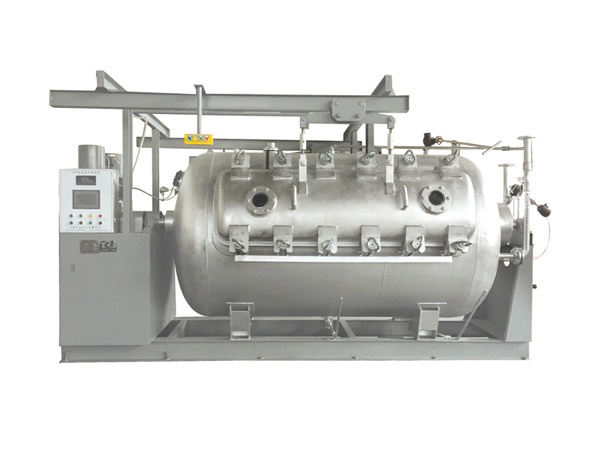
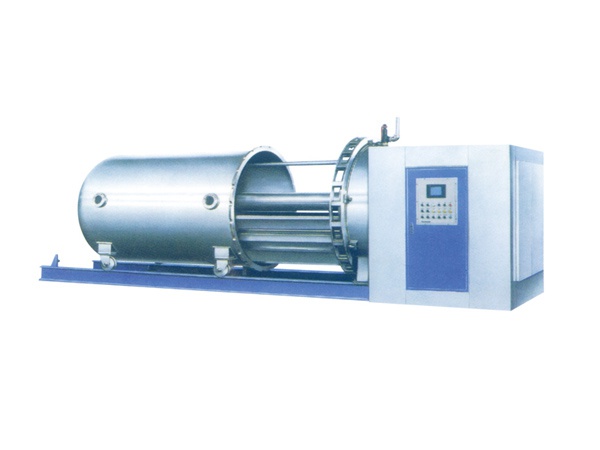
A high-temperature (HT) jigger is a pressure vessel and runs up to 140 °C. Choose it if you dye polyester or polyester blends with disperse dyes, or if you want one machine for every fabric type.
Technical data
| Item | Atmospheric jiggers (SWR / NSWR series) | HT jiggers (GR / NGR series) |
|---|---|---|
| Working width | 1,800 to 3,400 mm (SWR1000-1500: 1,800, 2,000, 2,200, 2,800, 3,200, 3,400 mm) | GR: 1,600 to 3,400 mm; NGR: 1,800 to 3,200 mm |
| Roll diameter | Per model, on request | GR: 680 to 1,200 mm; NGR: 800 to 1,200 mm |
| Main roller diameter | Per model, on request | GR: 220 to 325 mm; NGR: 245 to 325 mm |
| Max. temperature | Up to about 100 °C | NGR: 140 °C (pressure vessel) |
| Fabric speed | Per model, on request | GR: 0 to 130 m/min; NGR: 20 to 100 m/min |
| Fabric tension | Adjustable, held constant | GR: 0 to 90 kg, adjustable; NGR: 5 to 80 kg/m |
| Liquor ratio | Low; jiggers are typically 1:2 to 1:3.5 | NGR: 1:3 |
| Control | PLC, touch screen on NSWR and SWRl400; pass counting, auto reversing, auto stop, temperature control | Constant tension and constant speed control |
| Drive | AC frequency conversion; double-frequency models available | AC frequency conversion |
Figures come from the published data of each Runda series. Final values are fixed per order and confirmed in the quotation.
How to choose a jigger
Start with the widest fabric you run, then add margin. A machine sized to your widest cloth also runs narrower cloth, but not the other way round.
Check roll diameter against your usual batch length. A larger roll holds more metres per batch, so you change over less often.
Look at the control system. Pass counting, automatic reversing and temperature control remove most operator errors. Constant tension and constant speed are what keep shade even from the first end to the last.
Send us your steam pressure and your power supply. Both change the quotation. Voltage and frequency can be set to your country.
For wide, heavy or large-batch work, ask about the double-frequency-conversion models (NSWR series).
Frequently asked questions
Can a jigger dye knit fabric?
Seldom. A jigger holds the cloth under tension along its length, and most knits do not tolerate that. An overflow dyeing machine is the usual choice for knits.
What is the difference between a jigger and an overflow machine?
A jigger runs the cloth flat between two rollers through a small bath. An overflow machine sews the cloth into a loop and circulates it in a tube with dye liquor. Jiggers suit woven fabric and use less water. Overflow machines suit knit and delicate fabric.
Do you supply high-temperature jiggers?
Yes. The GR and NGR series run at high temperature and pressure for polyester and blends.
Can the working width be changed?
The standard widths are listed above. Other widths can be quoted on request.
What do I send for a quote?
Fabric type, widest fabric, batch size or daily output, dye class, steam pressure, and destination country.