


What the NGR propeller jigger adds to a normal jigger
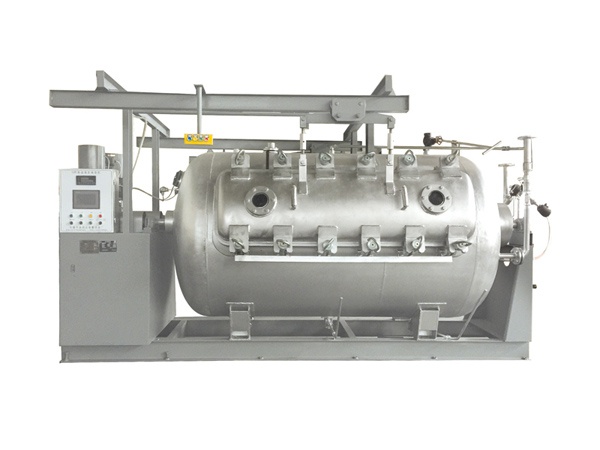
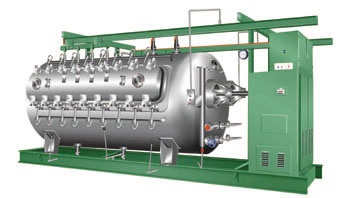
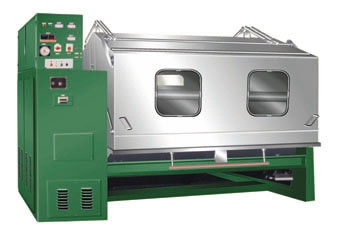
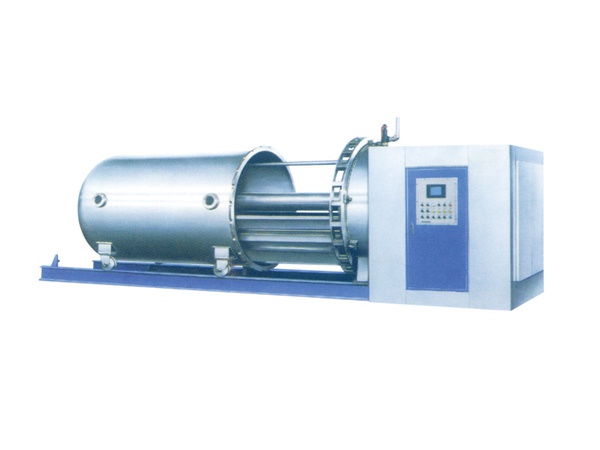
The NGR is a high-temperature high-pressure jigger. The vessel is closed and rated to 140 °C, so it can dye polyester with disperse dye, which an atmospheric jigger cannot.
Runda lists it for cotton, acrylic, polyester-cotton, polyester, silk and spandex fabrics, and as especially suitable for extra-wide cloth. The liquor ratio is 1:3, which keeps water, steam and chemical use low.
Constant tension and constant fabric speed are core features. The tension is adjustable and held uniform across the process, so tension-sensitive cloth runs with almost no tension.
Published specifications: NGR HTHP Propeller Jigger
| Item | Published value |
|---|---|
| Max fabric roll diameter | 800 to 1,200 mm |
| Max fabric working width | 1,800 to 3,200 mm |
| Main roller diameter | 245 to 325 mm |
| Working temperature | 140 °C |
| Liquor ratio | 1:3 |
| Fabric speed | 20 to 100 m/min |
| Fabric tension range | 5 to 80 kg/m |
| Motor power | 3 to 10 kW |
| Max working pressure | 2.75 × 10^5 Pa (about 0.275 MPa) |
| Construction | Low-alloy steel plate and stainless steel plate, electrical components |
Figures are the published data of the NGR series.
Typical points for HTHP jiggers (reference values per industry standards)
| Item | Reference value | Note |
|---|---|---|
| Polyester disperse dyeing | 130 to 135 °C hold, 30 to 60 min | Per dye supplier recipe |
| Heating rate | 1 to 2 °C/min | Slower for deep shades |
| Reduction clearing after dyeing | 70 to 80 °C | Done in the same machine |
Reference values per industry standards for this type of machine. Final figures for an order are confirmed in the quotation.
Selection points for the NGR
Width. Runda publishes 1,800 to 3,200 mm. Confirm exactly which width is built for your order.
Pressure rating. 2.75 × 10^5 Pa is the published working pressure. Local pressure-vessel rules may require a certificate; tell us your destination.
Tension. The published 5 to 80 kg/m range lets you run light cloth and heavy cloth. Ask how it is set and shown.
Roll capacity. The 800 to 1,200 mm roll diameter sets lot length. Give your fabric weight and we compute metres per roll.
Operator skill. Runda describes the mechanics as simple, with standard automatic control. Ask for the operating manual language you need.
Typical applications of the NGR HTHP Propeller Jigger
- Disperse dyeing of polyester woven fabric
- Dyeing of polyester-cotton with a two-step recipe
- Extra-wide fabric for home textiles
- Delicate fabric such as silk and spandex blends
Configuration options
- Cloth discharge unit (optional)
- Additional heat exchanger or cooling (optional)
- Dosing tank with program control (optional)
- Central control with other jiggers (optional)
Items marked optional are available on request. The final configuration is confirmed on the quotation.
NGR HTHP Propeller Jigger: frequently asked questions
What is the maximum working temperature?
140 °C, with a maximum working pressure of 2.75 × 10^5 Pa.
What liquor ratio does it run?
1:3, which is low for a dyeing machine.
Which fibres can it dye?
Cotton, acrylic, polyester-cotton, polyester, silk and spandex fabrics, per the published list.
Why is it called a propeller jigger?
The name is Runda's series name. Ask us for the drawing if you need to see the liquor circulation layout.