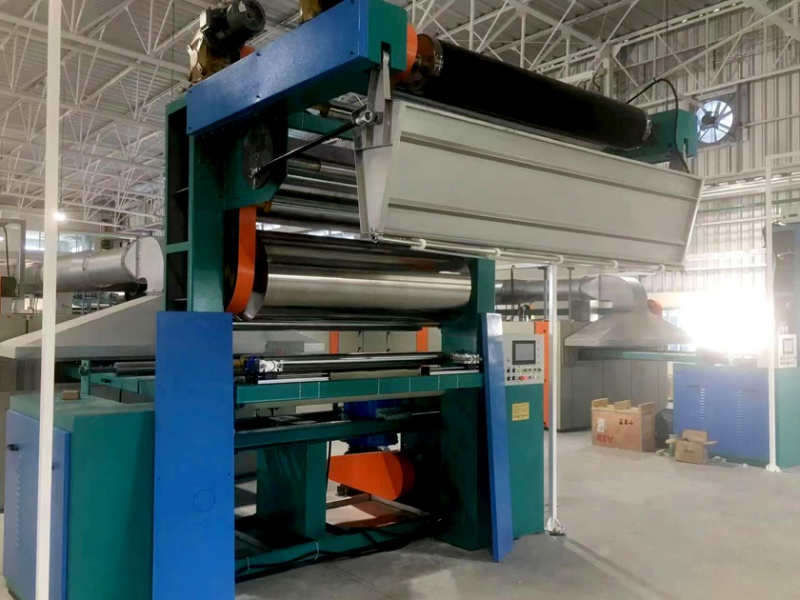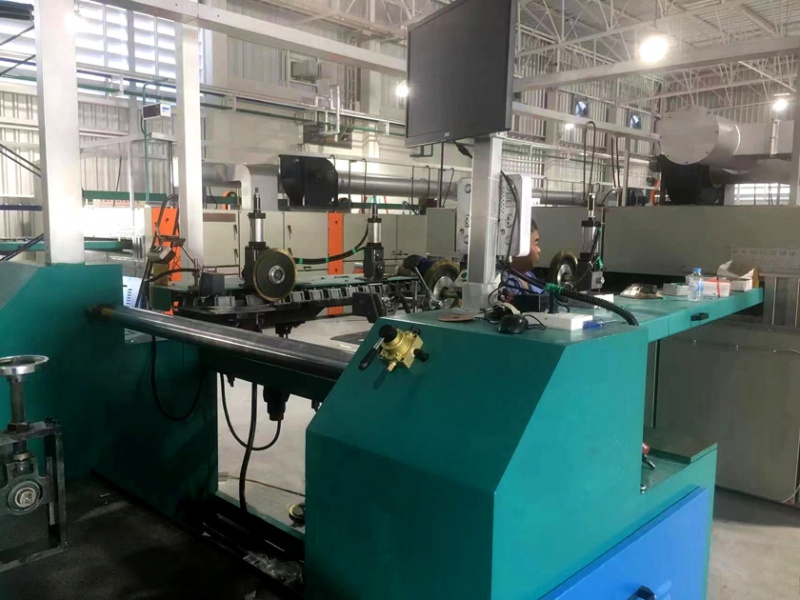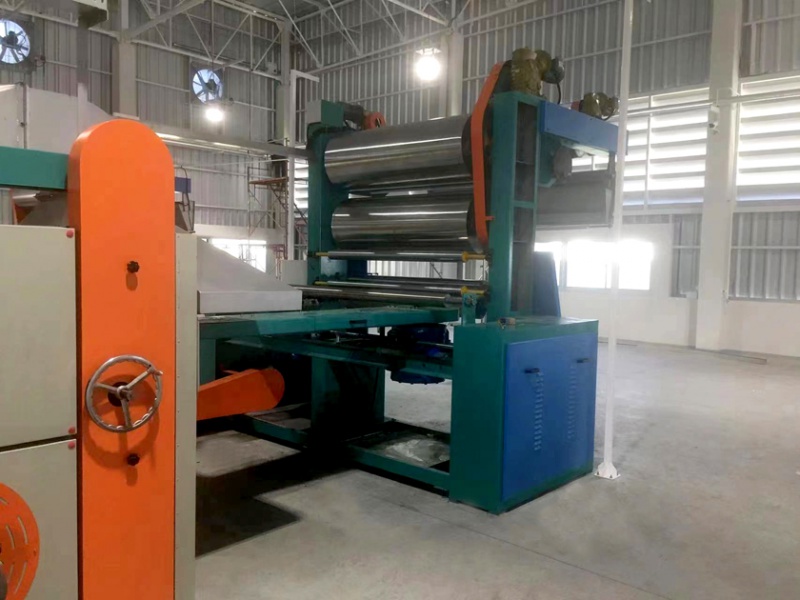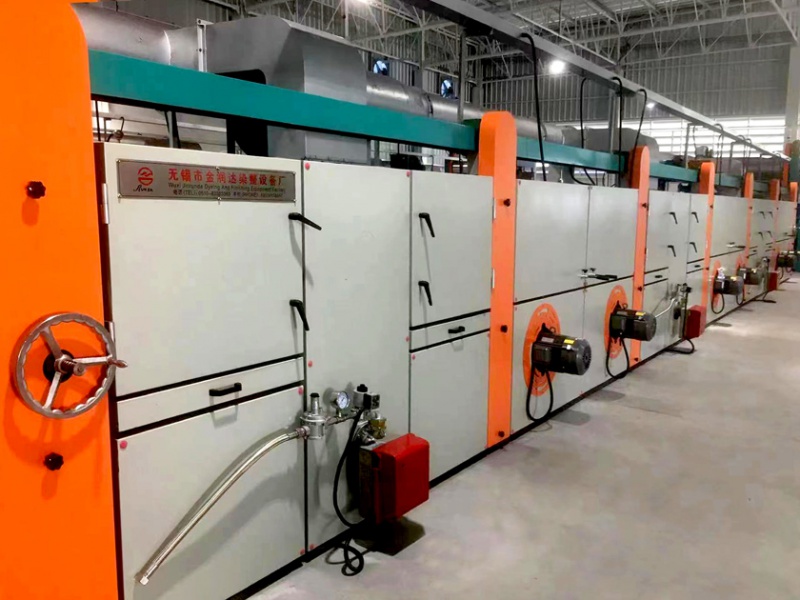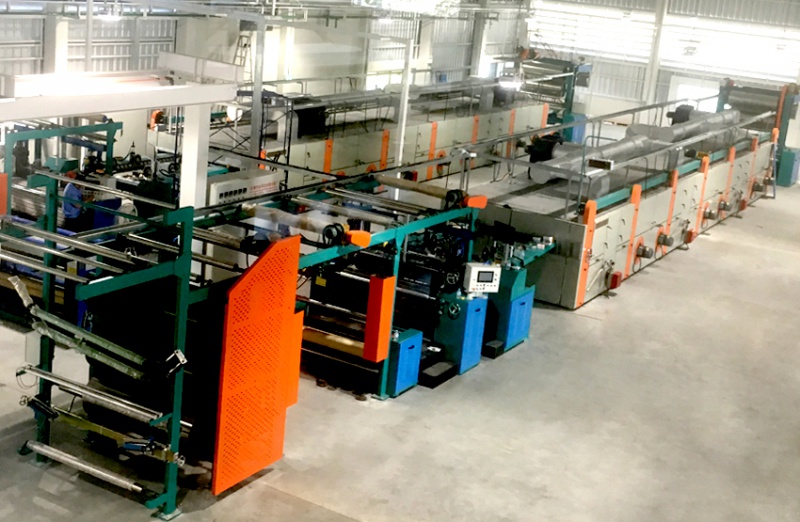
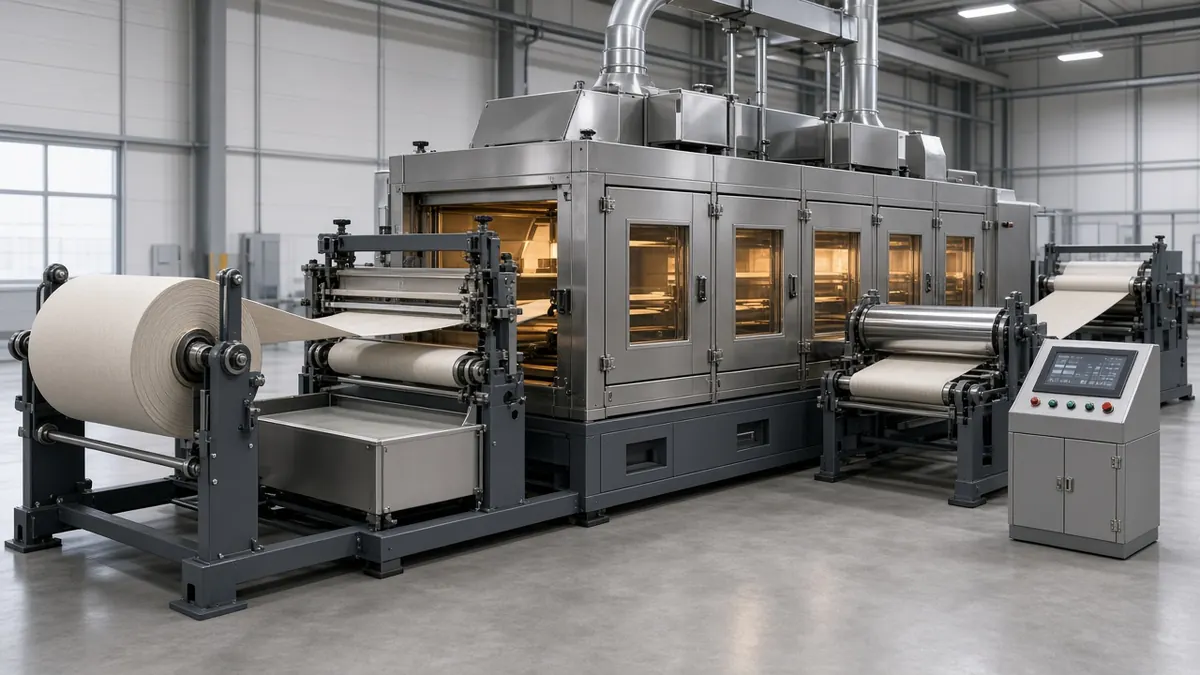
What a coating line does
A coating machine spreads a layer of polymer on the cloth to a set thickness. The cloth then passes through an oven that dries or cures it. The result is waterproof, blackout, flame-retardant or otherwise functional fabric.
Typical products are tarpaulin, tent fabric, awning cloth, bag fabric, rainwear and blackout curtain.
Direct or transfer coating
Direct coating puts the coating on the cloth with a knife. It suits tightly woven fabric. A loose or stretchy fabric can pull out of shape, or the coating soaks through.
Transfer coating puts the coating on release paper first and then bonds it to the cloth. It suits stretchy, knit or open fabric and gives a smooth surface. Tell us which route you use. The machine layout is different.
What to specify (typical ranges)
| Item | Typical range | Note |
|---|---|---|
| Coating weight (dry) | About 40 to 250 g/m² for most uses | Transfer lines for synthetic leather; direct coating varies with the coating |
| Knife gap | About 0.05 to 0.4 mm | Set at the knife, adjusted per recipe |
| Line speed | About 8 to 40 m/min | Limited by oven length and coating |
| Oven temperature | Depends on the coating; PVC pre-gel about 140 to 150 °C | Confirm with your coating supplier |
| Fabric width | To your widest cloth | Quoted per order |
| Let-off and take-up | Roll to roll | Options on request |
Typical values for coating lines in general. For RD series specifications and brochures, email us.
How to choose
Start with the coating, not the machine. PU, PVC, acrylic and rubber differ in viscosity, drying and curing. They set the knife type, the oven and the exhaust.
Then the fabric: woven or knit, weight, width, and whether it stretches. Then the coating weight you need, which sets the number of passes and the oven length.
Ask about solvent handling. Solvent-based coatings need exhaust treatment and fire protection. Water-based coatings need a longer oven for the same speed.
Frequently asked questions
Do you publish RD series specifications?
Specifications depend on the configuration. Email your fabric, coating and width and we send the matching data sheet.
Can the line coat both sides?
Two-side coating is done with two coating heads or two passes. Tell us the structure you need.
Can I use an existing stenter as the oven?
Sometimes, for curing coatings with a hot air oven. The coating head is a separate unit. Send the stenter details.
What do I send for a quote?
Fabric type and width, coating type, dry coating weight, line speed or daily output, solvent or water-based, and destination country.
RD series gallery