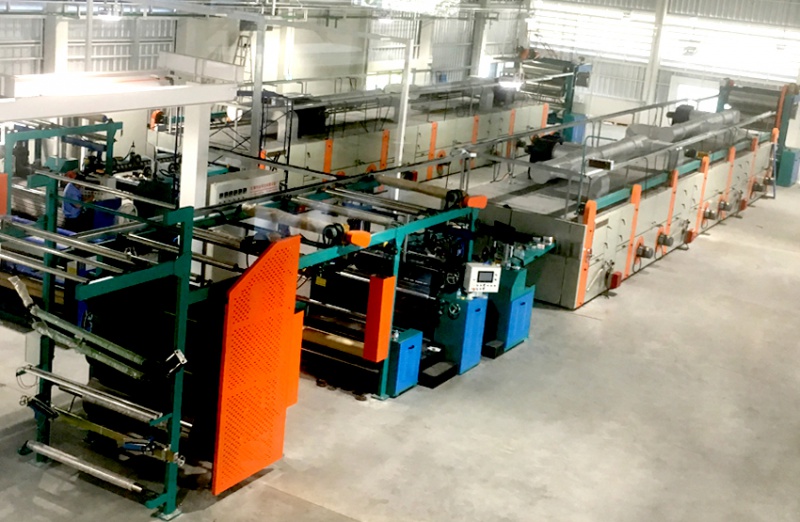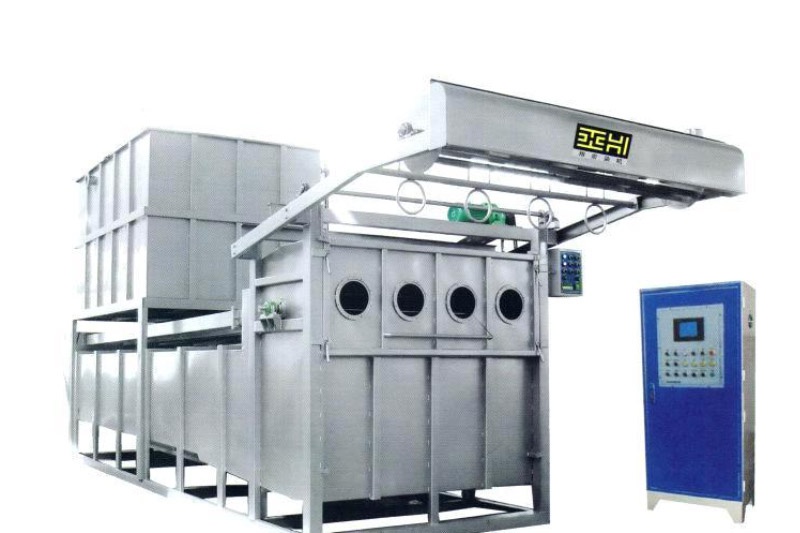


Where the JRD stenter sits in the finishing line
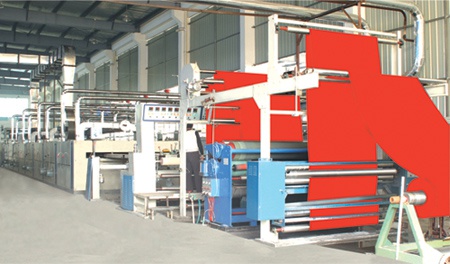
The JRD series is a hot-air circulation stenter. It takes wet or damp fabric from the padder or hydro-extractor, holds both selvedges on two chains, and carries the cloth through a row of heated chambers. Drying, width setting and heat setting happen in the same pass.
Runda lists it for dewatering, finishing, drying, baking and heat setting of woven and knitted fabric. Because the oven is a plain hot-air chamber, it is also the usual place to cure resin finishes and light coatings after padding.
Position in the line: after dyeing or padding, before inspection and batching. Heat-set polyester usually passes through the stenter before dyeing as well, to fix the width early.
Published specifications: JRD Hot-Air Stenter
| Item | Published value |
|---|---|
| Type | Hot-air circulation |
| Nominal width | 1,800 to 3,400 mm |
| Width adjustment | 900 to 3,200 mm |
| Fabric holding | Pins, clips, or combined pin-clip |
| Nominal speed | 100 m/min |
| Oven temperature | 220 °C |
| Oven sections | N sections, 3 m each |
| Overfeed range | -10% to +100% |
| Heat source | Heat transfer oil, city gas or electric heating |
| Edge sensing | High-precision infrared |
| Rail | Cast iron rail |
| Fabric delivery | Swing or roll |
| Drive side | Left or right |
| Installed capacity | 130 kW (example: 8-section, 180 model) |
Figures are the published data of the JRD series. Number of sections, width and heat source are fixed per order.
Typical process settings for a hot-air stenter
| Item | Reference value | Note |
|---|---|---|
| Heat setting, polyester | 190 to 210 °C, about 20 to 30 s | Depends on fabric, dye and weight |
| Drying, cotton and blends | 120 to 160 °C | Chamber air speed and fabric weight decide dwell time |
| Resin cure after padding | 150 to 170 °C, 1 to 3 min | Follow the resin supplier's data sheet |
| Oven sections for a drying-only job | 4 to 6 | More sections allow higher speed or heavier fabric |
Reference values per industry standards for this type of machine. Final figures for an order are confirmed in the quotation.
Selection points for the JRD stenter
Width. Pick the nominal width for your widest finished cloth plus a margin for the edge chain. The published 900 to 3,200 mm adjustment range shows how narrow the same machine can run.
Sections. Each section is 3 m. Count the dwell time you need at your slowest, hottest recipe, then divide by the speed. A drying-only line needs far fewer sections than a heat-setting line for polyester.
Holding system. Pins suit knits and light wovens. Clips suit firm woven selvedges. The combined pin-clip chain covers a mixed order book on one machine.
Overfeed. The -10% to +100% range matters for knits. Without overfeed the cloth dries under tension and comes out narrow and heavy.
Heat source. Heat transfer oil, city gas and electric heating are all listed. Choose by local fuel price and permits, not by brochure.
Typical applications of the JRD Hot-Air Stenter
- Heat setting of polyester and polyester-blend woven and knit fabric
- Drying and width setting after dyeing or padding
- Curing of resin and soft-hand finishes after a padder
- Baking and finishing of coated fabric at moderate temperature
Configuration options
- Three-finger silent expander for knit and woven fabric (part of the listed accessories)
- Brush overfeed with pin pressing device on variable-frequency control (listed accessory)
- Cloth-edge tracking with infrared sensing (listed accessory)
- Entry padder or moisture control at the entry (optional, on request)
- Exhaust volume control and heat recovery on the stack (optional, on request)
Items marked optional are available on request. The final configuration is confirmed on the quotation.
JRD Hot-Air Stenter: frequently asked questions
How many oven sections do I need?
Work from dwell time. Multiply the required time in the oven by the line speed to get the oven length, then divide by 3 m per section. Send your fabric, weight and process and we size the section count with you.
Can the JRD stenter run knit and woven fabric on the same machine?
Yes, with the combined pin-clip chain. Pins hold knit, clips hold woven. The overfeed range of -10% to +100% covers the shrink control that knit needs.
What heat sources can it use?
Heat transfer oil, city gas or electric heating. The choice is set at order, so confirm what your plant can supply before quoting.
Can this machine cure resin finishes?
The oven is a standard hot-air chamber, so resin curing is a normal use. Set temperature and dwell time from the resin supplier's data sheet; see the resin finishing line page for the full layout.