
What alkali reduction does to polyester
Alkali reduction, also called weight reduction or de-weighting, etches the surface of polyester fibre with hot sodium hydroxide. The fibre loses mass, becomes finer on the surface, and the fabric turns soft and silk-like.
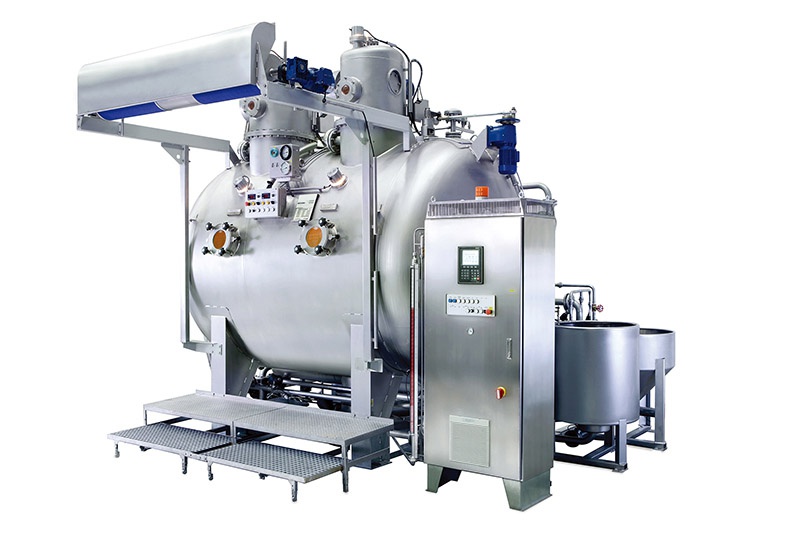
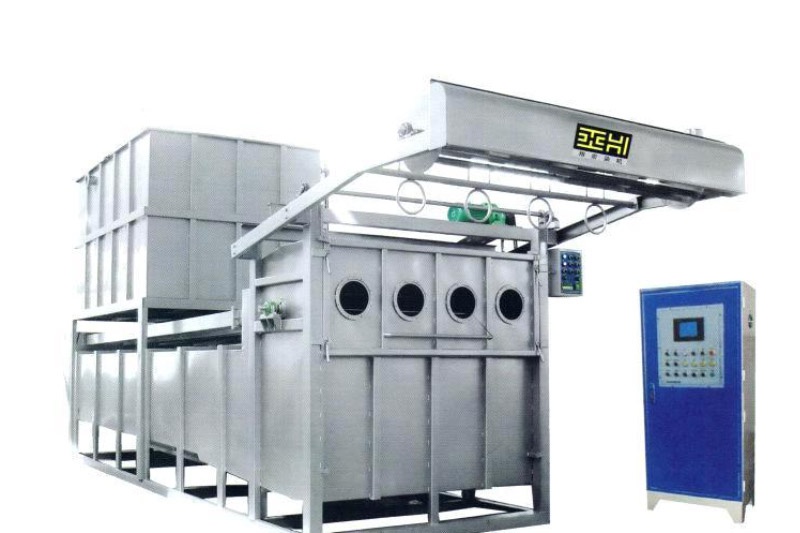
This Runda machine is a horizontal square overflow jet type. It is a new atmospheric model that combines bleaching and alkali reduction in one machine.
Runda lists semi-automatic or fully automatic computer control, a new circulating pump design, and indirect steam heating through a heat exchanger.
Published specifications: Liquid-Flow Alkali Reduction Machine
| Item | Published value |
|---|---|
| Type | Horizontal square, overflow jet |
| Fabric capacity | 500 to 1,200 kg |
| Cloth speed | 50 to 200 m/min |
| Nozzle pressure | 0.08 to 0.12 MPa |
| Fabric weight range | 50 to 500 g |
| Weight reduction | 10% to 25% in 1.5 to 2 hours |
| Max working temperature | 98 °C |
| Heating | Indirect steam via heat exchanger |
| Main pump power | 18.5 to 30 kW |
| Control | Semi-automatic or fully automatic computer control |
Figures are the published data of this model. The unit of fabric weight is shown as grams on the source page and is read here as g/m².
Typical alkali reduction process values (reference values per industry standards)
| Item | Reference value | Note |
|---|---|---|
| NaOH concentration | 10 to 40 g/L | Often with a quaternary ammonium accelerator |
| Temperature | 95 to 98 °C for an atmospheric machine | Higher temperature in a pressure machine |
| Effluent | Strongly alkaline | Needs neutralisation before discharge |
Reference values per industry standards for this type of machine. Final figures for an order are confirmed in the quotation.
Selection points for the liquid-flow alkali reduction machine
Target reduction. State the weight loss you need. The published 10% to 25% in 1.5 to 2 hours is the reference for planning cycle time.
Fabric weight. The range 50 to 500 g covers light to heavy polyester. Heavier cloth needs higher nozzle pressure.
Chemical handling. Hot caustic is hazardous. Ask for dosing, tank and drain details that fit your safety rules.
Control level. Semi-automatic or fully automatic. Fully automatic gives better repeatability of weight loss.
Effluent. Plan neutralisation and, if used, recovery of the alkali. Local limits differ.
Typical applications of the Liquid-Flow Alkali Reduction Machine
- Silk-like hand on polyester woven fabric
- Weight reduction of microfibre and fine denier cloth
- Bleaching and alkali reduction in one cycle
- Alkali reduction of polyester knit for soft drape
Configuration options
- Program control with weight-loss logging (optional)
- Alkali dosing and neutralising unit (optional)
- Heat recovery on drain (optional)
- Larger capacity within the 500 to 1,200 kg range (set per order)
Items marked optional are available on request. The final configuration is confirmed on the quotation.
Liquid-Flow Alkali Reduction Machine: frequently asked questions
How much weight does it remove?
Runda lists 10% to 25% reduction in 1.5 to 2 hours. The final loss depends on fabric, recipe and temperature.
Is it an atmospheric machine?
Yes, maximum working temperature is 98 °C.
Can it also bleach?
Runda describes a new atmospheric model that combines bleaching and alkali reduction in one machine.
What do I send for a quote?
Fabric type, weight range, lot size, target reduction, control level and destination country.