
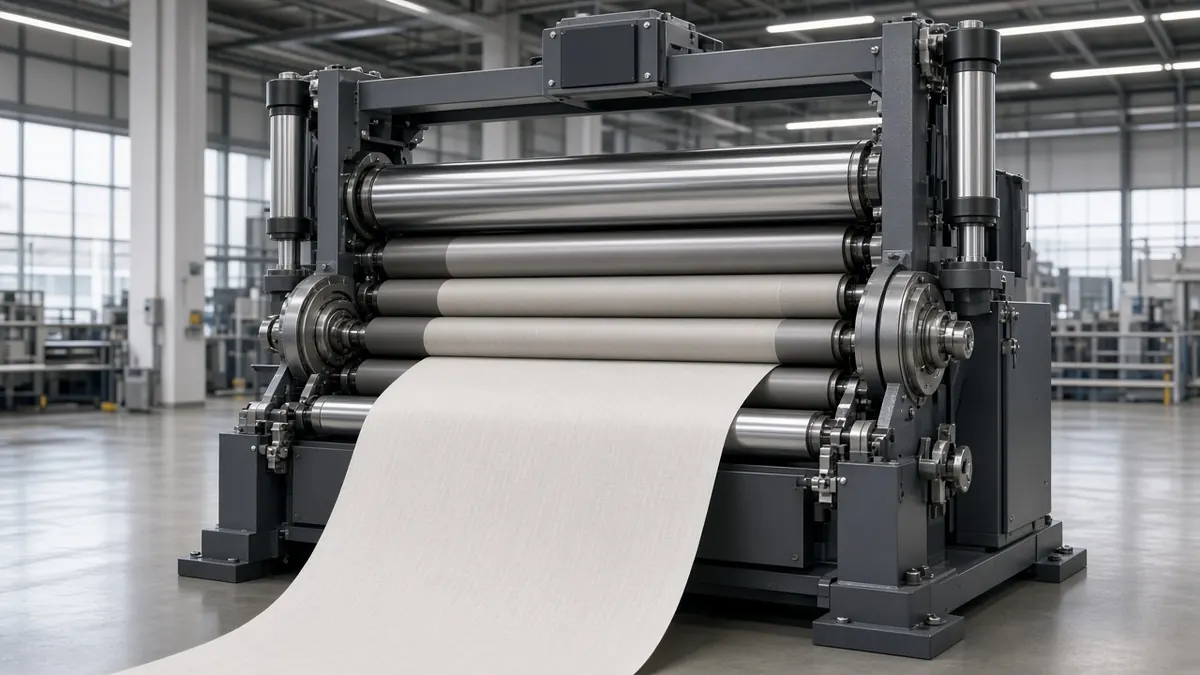
What a calender does
A calender passes the cloth through the nip of two or more rollers under heat and pressure. The surface is flattened, the cloth gets thinner and the surface gains gloss. Some calenders also press a pattern into the cloth.
The spelling matters: calender with an e is the textile machine. Calendar with an a is the one on the wall.
Main types of calendering
Friction calendering gives a high gloss. One roller runs faster than the other and polishes the surface.
Beetling gives a flat, linen-like look by hammering the cloth.
Moire calendering produces a watermark pattern. Embossing presses a pattern from an engraved roller. Schreiner calendering uses fine lines engraved on a steel roller to give a soft luster.
Calendering changes the cloth. It becomes thinner and the handle becomes firmer, even paper-like. Some effects wash out unless the cloth is finished with resin.
What to specify for a calender
| Item | Options | Note |
|---|---|---|
| Roller types | Steel, cotton, paper, engraved | Number and combination set the effect |
| Working width | To your widest fabric | Quoted per order |
| Roller temperature | Set by heating method | Oil, steam or electric heating |
| Line pressure | Hydraulic loading | Higher pressure gives a flatter, glossier surface |
| Speed | Set by effect | Friction effects run with speed difference between rollers |
| Embossing | Engraved roller available | Pattern supplied by you or engraved per order |
Calender ratings depend on the effect you want. We give them in the quotation.
How to choose
Describe the effect first: gloss, flat, soft luster, moire, or an embossed pattern. Each needs a different roller setup.
Then the fabric: fiber, weight, width. Cotton, polyester, satin, coated fabric and oilcloth all behave differently under heat and pressure.
Ask for a sample on your cloth. Calendering effects are easier to judge in your hand than on a drawing.
Frequently asked questions
Is calendering permanent?
It depends on the fiber and finish. On thermoplastic fibers such as polyester the effect lasts. On cotton it can wash out unless the cloth is resin-finished.
What is the difference between a calender and a hot stamping machine?
A calender presses the cloth surface. A hot foil stamping machine transfers a metal or colored foil onto it. We supply both.
What do I send for a quote?
Fabric type and weight, widest fabric, the effect you want, and destination country.