
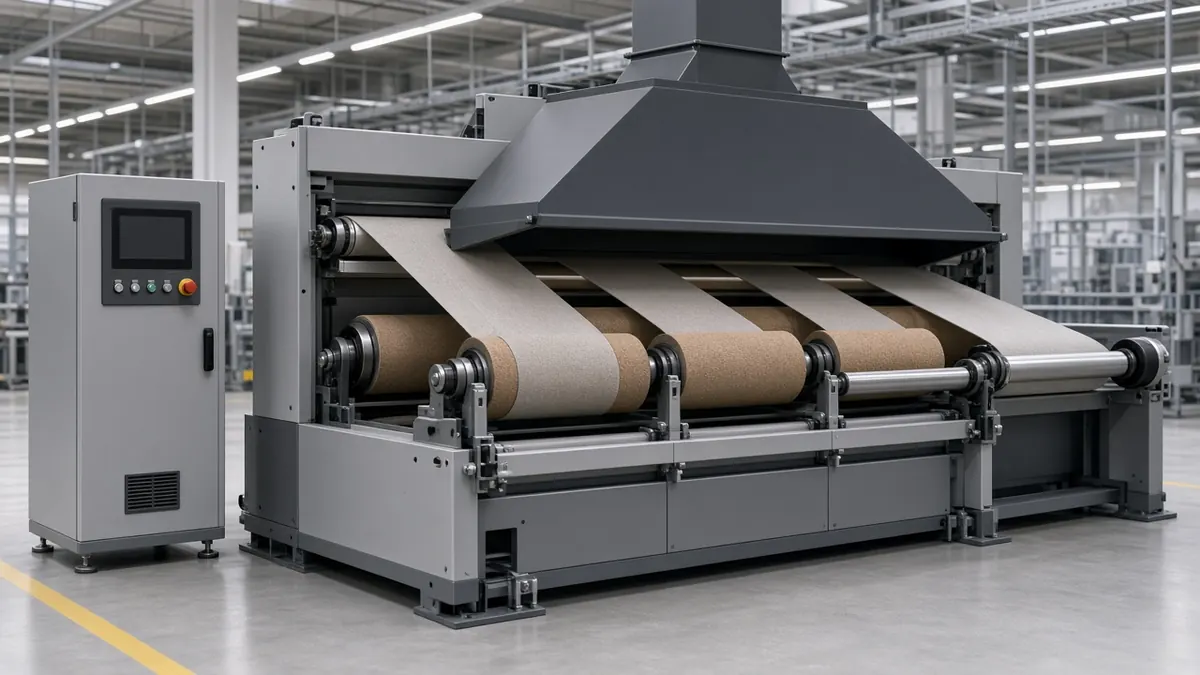
What a sueding machine does
Rollers covered with sandpaper or abrasive grit turn against the cloth. They break the surface fibers and raise a very short pile. The cloth feels like peach skin or suede.
Sueding is not napping. Napping lifts long fibers with wire clothing or teasels to make a thick, brushed surface. Sueding sands a short, even pile.
Fabrics
Cotton, polyester, polyester-cotton and regenerated cellulose, both woven and knit. Microfiber polyester is the most common peach skin fabric.
The cloth loses some strength where it is sanded. Test strength on your fabric. A heavier-weight cloth tolerates more sanding.
What to specify for a sueding machine
| Item | Options | Note |
|---|---|---|
| Number of sanding rollers | Single or multiple | More rollers give a finer, denser pile in one pass |
| Roller speed | Set by effect | Variable-speed drive |
| Abrasive | Sandpaper or diamond-coated | Grit chosen by fabric |
| Fabric tension | Adjustable | Lower tension for knit fabric |
| Dust extraction | Required | Sanding makes a lot of fine fiber dust |
| Working width | To your widest fabric | Quoted per order |
Sueding ratings depend on the fabric and effect. We give them in the quotation.
How to choose
State the fabric and the handle you want. A light peach finish and a heavy suede need different grit and roller count.
Plan the dust extraction. It protects workers and keeps the cloth clean.
Plan the washing or brushing after sueding. The dust must come off the cloth before dyeing or packing.
Frequently asked questions
What is the difference between sueding and emerizing?
Both words describe sanding the cloth surface with abrasive rollers. Emerizing is the older term.
What is peach skin finish?
A very short, soft pile on the surface, usually on microfiber polyester or cotton, that feels like the skin of a peach.
What do I send for a quote?
Fabric type and weight, width, the handle you want, speed target, and destination country.