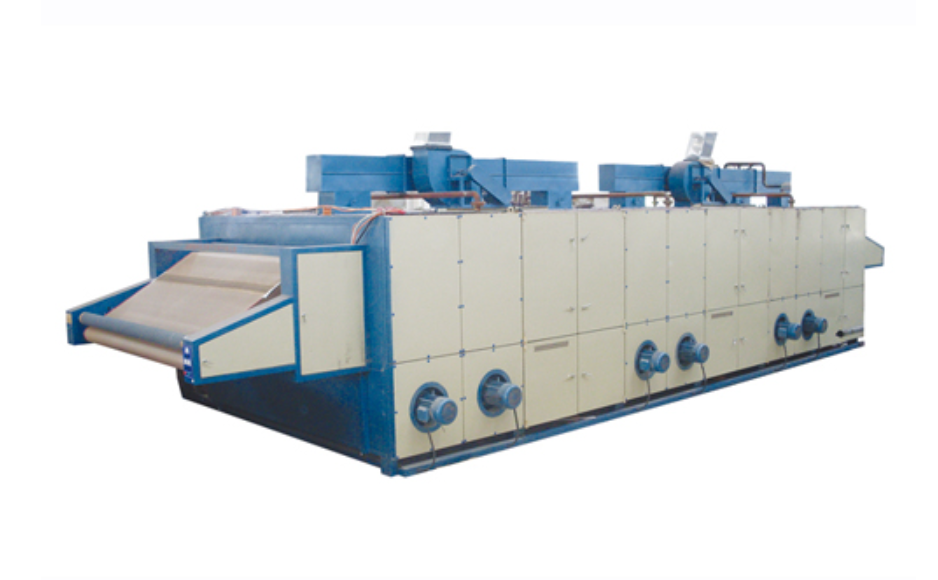


Why a relax dryer instead of a stenter
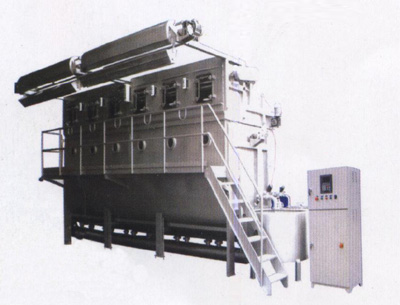
A relax dryer dries knit fabric without holding it on chains. The cloth lies loose on a conveyor, passes through hot air, and shrinks naturally while it dries. Runda describes a tension-free exit and low tension throughout.
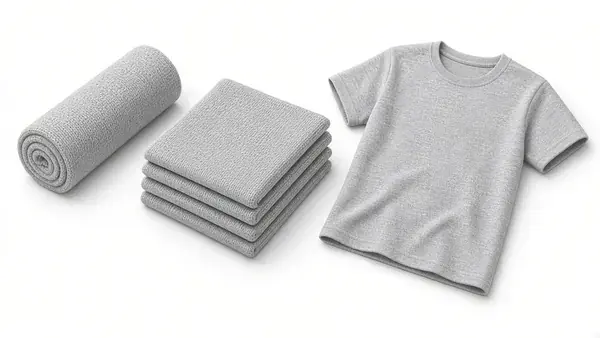
That preserves bulk, stretch and soft hand in tubular and open-width knits. A stenter pulls the cloth to width, which suits woven fabric but can flatten knit.
Typical place in the line: after the hydro-extractor or padder, before compacting or batching.
Published specifications: Runda Relaxed Dryer
| Item | Published value |
|---|---|
| Entry | One or more fabric pieces; overfeed into the drying conveyor |
| Open-width entry | Herringbone expander available |
| Tubular entry | Circular guide opens circular knit fabric |
| Exit | Drying conveyor to tension-free exit conveyor with swing delivery |
| Hand feel | Low tension throughout |
Runda publishes the structural features of this model. Width, drying length and heat source are confirmed per order.
Typical points for relax dryers (reference values per industry standards)
| Item | Reference value | Note |
|---|---|---|
| Drying temperature | 120 to 160 °C | Lower for sensitive fibres and elastane blends |
| Dwell time | 3 to 10 min | Set by moisture, weight and conveyor length |
| Overfeed | 10 to 40% on knit | Controls shrinkage and weight |
Reference values per industry standards for this type of machine. Final figures for an order are confirmed in the quotation.
Selection points for the relaxed dryer
Fabric form. Tubular knit needs the circular guide. Open-width knit needs the herringbone expander. Say which you run.
Overfeed. More overfeed gives more shrink and a bulkier cloth. Check how overfeed is set and whether it stays steady across the width.
Drying length. Heavy, wet cloth needs more length or lower speed. Give us the moisture after the extractor.
Elastane content. High-stretch blends need lower temperature and gentle handling. Say the blend.
Exit handling. The tension-free exit conveyor and swing delivery keep the hand. Confirm the plaiting or batching you need after it.
Typical applications of the Runda Relaxed Dryer
- Drying of tubular cotton and blend jersey
- Relaxed drying of open-width knit after dyeing
- Drying of fleece and terry where bulk matters
- Pre-shrinking of knit before compacting
Configuration options
- Herringbone expander for open-width fabric (listed as available)
- Other entry guides for specific fabric (listed as available)
- Multiple feed lanes (listed: more than one piece can be fed)
- Steam, gas or thermal oil heating (optional, set per order)
Items marked optional are available on request. The final configuration is confirmed on the quotation.
Runda Relaxed Dryer: frequently asked questions
What is the difference between a relax dryer and a stenter?
A relax dryer lets the cloth shrink freely and keeps bulk. A stenter holds the width on chains and fixes size. Knit usually goes through a relax dryer; woven through a stenter.
Can it dry tubular knit?
Yes. The circular guide opens circular knit as it enters.
Can it dry open-width fabric?
Yes, with the herringbone expander.
What do I send for a quote?
Fabric type, weight, tubular or open width, moisture after extraction, daily output and heat source.